
Mushroom Education
Maitake: From Forager’s Jackpot to Microdosing Companion
Apr
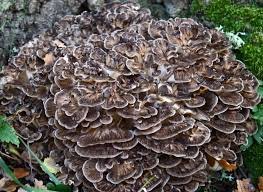
Amongst the fungal gems that our planet’s biodiversity has to offer, few compare to the exquisite nature of the Maitake Mushroom. Maitake translates to “Dancing Mushroom” in Japanese, because legend has it that foragers who find this rare gem would instinctively dance due to the excitement it caused them. Indeed, Maitake is an exceptionally delicious mushroom, long valued in Asian cuisine, which up until recently was only found in the wild, making it a truly rare and treasured delicacy. Today, the cultivation of Maitake has not only allowed the world to enjoy it year-round, but it has also spurred significant interest in researchers investigating its medicinal properties. maitake mushrooms
In traditional Japanese and Chinese medicine, Maitake has held a place of honor not just for its rich, earthy flavor, but for its reputation as a tonic for vitality, balance, and longevity. Historical accounts describe it as both food and remedy, used to fortify the body during illness, restore energy after hardship, and promote overall resilience.
Today, modern science has begun to validate many of these ancestral observations. Researchers have identified powerful polysaccharides and other bioactive compounds with immune-modulating, anti-inflammatory, and metabolic-supporting effects. This dual identity, as a gourmet ingredient and a functional medicine, has secured Maitake’s standing as one of the most respected mushrooms in both the kitchen and the clinic. In the USA, it is also known as “Hen of the Woods” and readily sought out by foragers in the eastern United States.
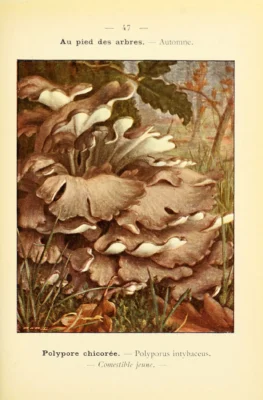
What is maitake mushrooms?
Maitake is a large and clustered polypore mushroom that grows at the base of old oak, elm, or maple trees. It is considered mildly pathogenic and rots the base of relatively old trees of these species. In North America, it’s sometimes called “Hen of the Woods” because its ruffled layers resemble the feathers of a hen.
When foraged in the wild, these mushrooms can grow to exceptional size, sometimes weighing 50-100 pounds! They often grow in patches under their host trees with many individual small to large fruiting bodies. Unlike other related polypores, such as Reishi and Turkey Tail, Maitake is relatively fleshy and soft, making it suitable for consumption after cooking. Maitake should not be consumed raw, as its flesh is indigestible without cooking!
The cultivation of Maitake is a relatively new development in mycology, which has made it much more accessible to the general public. It’s a bit more challenging to grow than other gourmet mushrooms, but many cultivators now include them in their repertoire. Likewise, the advent of cultivation has also opened the door to research related to the therapeutic properties of Maitake. While still in its infancy, this research has shown many interesting and promising avenues of research.
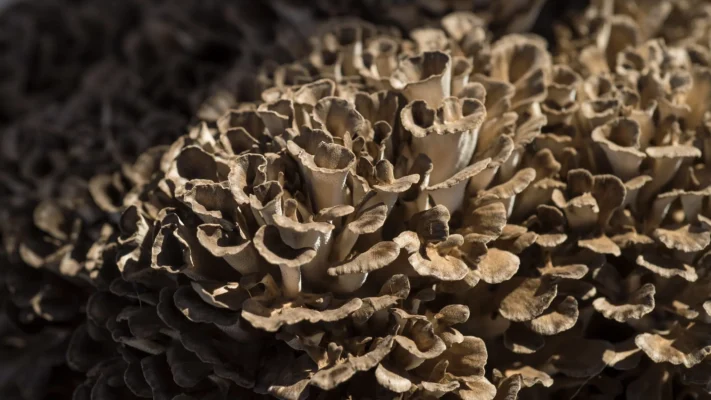
USDA photo by Lance Cheung.
The Health Benefits of Maitake
Maitake has been valued in Traditional Chinese and Japanese Medicine for centuries as a vitality enhancer and immune tonic. Historically, its consumption was associated with improving overall well-being, increasing stamina, and restoring balance after illness. Today, clinical and laboratory research has confirmed several of its most celebrated properties:
- Immune Modulation: Maitake is rich in beta-glucans, which are bioactive polysaccharides that form the basis of much of the research conducted on functional mushrooms. Maitake in particular contains a rich array of beta-glucans known as “Maitake D-fraction”, which are shown to activate immune cells such as macrophages, NK cells, and T-cells. This helps the body mount a stronger defense against pathogens while regulating overactive immune responses.
- Metabolic Support: Studies suggest Maitake may help regulate blood sugar levels and improve insulin sensitivity, making it of interest to those managing metabolic disorders. While it hasn’t been researched in detail, many anecdotal stories suggest Maitake may help with controlling blood sugar levels.
- Cardiovascular Health: Its polysaccharides and antioxidants may help reduce oxidative stress and support healthy cholesterol levels.
- Synergistic Cancer Therapy Support: Several clinical studies, primarily conducted in Japan, have investigated Maitake extracts alongside chemotherapy, with some suggesting improved treatment response and reduced side effects. This is due to the cytotoxic effects of Maitake, as well as its ability to promote immune responses that help attack cancer cells.
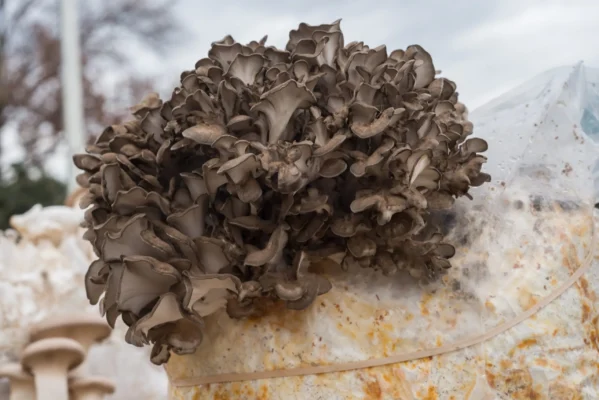
USDA photo by Lance Cheung.
maitake mushrooms in a Psychedelic Stack
While Maitake doesn’t have direct nootropic or psychoactive effects like Lion’s Mane, its systemic support makes it an ideal companion for both microdosing and higher-dose journeys.
Microdosing Support: Long-term psychedelic protocols can place subtle stress on the body, especially the immune and metabolic systems. Maitake’s beta-glucans help maintain immune resilience, while its stabilizing effects on blood sugar and circulation promote steady energy and mood. This is why we include it in PsyGuys’ Microdose Mushroom Gummies. It works behind the scenes to keep your body balanced so your mind can stay clear!
Macrodosing Ally: High-dose experiences can be physically taxing. Maitake’s anti-inflammatory and antioxidant properties may help buffer this stress, while its cardiovascular and immune support aid in post-journey recovery. It won’t alter the nature of the trip, but it can help you feel more physically grounded and resilient during the journey and in the days that follow.
Conclusion
Whether you want to take it as a regular supplement, as an accompaniment to a psychedelic trip, or simply as a delicious ingredient, there are many reasons to love Maitake. It nourishes through food, supports through medicine, and steadies the body for deeper mental or emotional work. Rooted in centuries of tradition yet backed by modern science, this “dancing mushroom” continues to prove its worth as both a culinary treasure and a functional ally, offering resilience, balance, and vitality to those who welcome it into their lives.
Considerations Before Consuming maitake mushrooms
Maitake is considered very safe and is consumed as food in large quantities worldwide. However, because it can lower blood sugar, those with diabetes or hypoglycemia should monitor levels closely if they are consuming Maitake regularly. People on blood pressure or anticoagulant medications should also check with their doctors before consuming Maitake regularly. As always, introduce any new supplement gradually and pay attention to how your body responds.
Frequently Asked Questions (FAQs) About Maitake
What are the main health benefits of Maitake?
Maitake supports immune balance, metabolic health, and cardiovascular function, and may complement specific cancer treatments. It also has a distinct and very beneficial effect on human taste buds!
Is maitake mushrooms psychoactive?
No. It doesn’t cause hallucinations or alter perception. This said, it can support physical well-being during psychedelic use.
Can maitake mushroomsbe taken daily?
Yes. It’s safe for regular use as food or in supplement form. Just make sure to monitor your blood sugar levels if you have diabetes and are taking medications, as it may lower your blood sugar levels.
Does cooking destroy its benefits?
Not significantly. Heat can improve the bioavailability of some compounds. If you are taking it for the medicinal properties, though, it is best to consume a high-quality extract that is processed in ways to preserve medicinal compounds and make them bioavailable.
What’s the best form to take for therapeutic use?
Extracts standardized to beta-glucans (D-fraction or MD-fraction) are the most researched, but whole mushroom powders and culinary use also offer benefits.
Can Maitake help with microdosing protocols?
Yes. Its immune and metabolic support can help maintain physical resilience during extended regimens.
Are there any side effects?
Not really. Mild digestive upset is possible if consumed in large quantities. Generally speaking, the only side effects are a delicious flavor and perhaps not getting as sick as you usually would!
How long until benefits are noticeable?
Immune and metabolic effects tend to build over 2–4 weeks of consistent use.
Can I forage maitake mushrooms myself?
Yes, if you live in an area where it occurs and can identify it safely. If you are not confident with foraging, make sure to go with somebody who is!
Is maitake mushrooms vegan-friendly?
Absolutely. It contains zero animal products, making it an excellent protein source for vegetarians and vegans.
