
Mushroom Education
Chaga: The Black Gold of the Birch Forest
Apr
In the birch forests of the Northern Hemisphere, there grows a functional fungus unlike anything else in the natural world. Treasured for centuries in Russia, Finland, and across Slavic traditions, it is known as Chaga – a “mushroom” that, in truth, is not a mushroom at all. Its unusual biology grants it a pharmacological profile unmatched by any other member of the fungal kingdom.
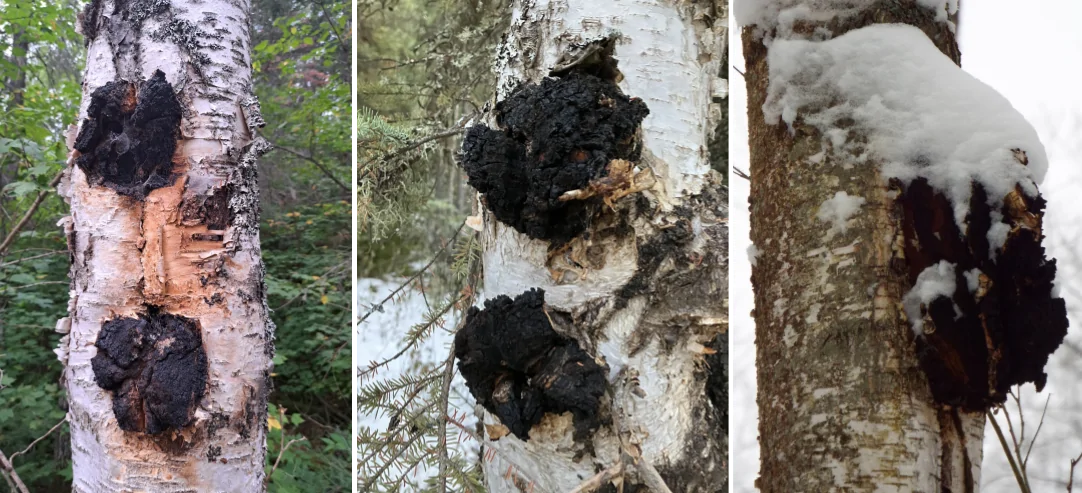
This is because Chaga is technically a sterile conk, a rare phyto-fungal structure that is derived from a parasitic fungus and its birch tree host. Essentially, as the Chaga fungus grows within the tissues of its host, it stimulates the immune response of the tree, resulting in a dense charcoal-like growth that is concentrated with an extraordinary range of bioactive compounds. These include the birch’s own triterpenes, such as betulin and betulinic acid, alongside the fungus’s polysaccharides, melanin, and phenolic compounds. The result is a dense, charcoal-like growth containing a cocktail of therapeutic compounds derived from both of these organisms. This makes it much different than a traditional mushroom whose tissues are entirely fungal.
Chaga has been revered in folk medicine for its ability to strengthen the body, restore vitality, protect against illness, and help in the treatment of a large number of diseases. It’s phenomenally high in antioxidants, something which helps the body defend itself from oxidative stress and inflammation. Today, modern science is beginning to validate what traditional healers have known for centuries, that Chaga is one of nature’s most remarkable and complex allies for human health.
What Exactly Is Chaga?
If you’ve ever seen Chaga, then you understand why it’s nothing like a mushroom. It’s a dark spherical mass that resembles a strange, crusty tumor. These are known botanically as “cankers”, and in the case of Chaga, it is a result of the fungus, Inonotus obliquus, which infects living Birch trees. Birch trees on their own are considered to have a wide range of medicinal properties, and their sap has been utilized for centuries as a nourishing tonic, natural sweetener, and traditional remedy for everything from fatigue to kidney ailments. When combined with this very special fungus, the result is a rare phyto-fungal fusion that concentrates the healing chemistry of both organisms into a single, dense mass.
From an ecological perspective, Chaga develops slowly, often taking decades to reach a harvestable size. During this time, it maintains a long-term relationship with its host, drawing nutrients while also influencing the tree’s chemistry. Unlike typical mushrooms that appear seasonally and complete their reproductive cycle within weeks, Chaga can persist for a decade or more, quietly amassing its complex array of compounds.
From Traditional Medicine To Modern Treatment
For centuries, Chaga has held an esteemed place in the folk medicine traditions of Russia, Finland, and other Slavic and northern cultures. In Russia, its documented medicinal use dates back to at least the 16th century, where it was prepared for treating a range of ailments, including stomach ulcers, gastritis, liver disorders, tuberculosis, and even certain cancers. In western Siberia, the Khanty people boiled Chaga for teas aimed at restoring vitality and treating viral-related conditions, and used it in traditional women’s health care following childbirth or menstruation.
Among various First Nations in Canada and Alaska, Chaga was valued both medicinally and ritually. The Cree, Chipewyan, Gitksan, Wet’suwet’en, and Tenaina peoples employed it for rheumatic pain relief, toothaches, and as a counter-irritant. It also served as a ceremonial incense, a fire-starting tinder, and even a tool for divination. The inner rusty-brown layer was commonly decocted into a wintergreen-scented infusion, an aroma inherited from the birch host. Chaga is one of the few medicinal mushrooms that not only tastes okay, but it tastes delicious.
In the modern era, Chaga’s reputation as a health tonic continues, but now with the benefit of phytochemical and pharmacological analysis. Scientific studies have identified a spectrum of bioactive compounds such as betulin, betulinic acid, polyphenols, melanin, and beta-glucans, responsible for its antioxidant, immunomodulatory, and potential anticancer properties. Laboratory research has shown that Chaga extracts can reduce oxidative DNA damage in human lymphocytes, inhibit tumor cell proliferation, and display vigorous phenolic-based antioxidant activity.

Chaga as an Antioxidant Powerhouse
One of the most striking features of Chaga is its exceptionally high antioxidant capacity, often ranking among the highest of any natural substance tested. Antioxidants are compounds that neutralize free radicals, unstable molecules that can damage cells, DNA, and other vital structures through a process known as oxidative stress. Chronic oxidative stress has been linked to a wide range of conditions, including cardiovascular disease, neurodegenerative disorders, diabetes, and premature aging.
Chaga’s antioxidant profile is primarily attributed to its dense concentration of polyphenols, melanin pigments, and triterpenes. Melanin, in particular, is present in unusually high amounts, giving Chaga its dark, almost charred appearance and contributing to its free radical–scavenging ability. In laboratory assays, Chaga has demonstrated the capacity to significantly reduce oxidative DNA damage and lipid peroxidation, suggesting a potential role in protecting cellular integrity.
While much of the evidence so far comes from in vitro and animal studies, the implications are compelling: by helping the body manage oxidative stress, Chaga may support overall immune resilience, reduce inflammation, and promote healthier aging. These benefits echo the uses recognized by traditional healers, now reframed through the lens of modern biochemistry.
Chaga in a Psychedelic Stack
While Chaga itself is not psychoactive, its unique chemistry makes it an intriguing companion in a psychedelic stack. Thanks to its rich antioxidant and anti-inflammatory profile, Chaga may help support the body’s physiological balance during and after an intense psychedelic experience. Oxidative stress and inflammation can increase during periods of heightened neural activity or emotional processing, and Chaga’s bioactive compounds offer potential neuroprotective and cellular-support benefits.
In traditional herbalism, Chaga was often used as a tonic to restore vitality and fortify resilience over the long term. In a modern context, this translates to potential synergy with plant medicines or entheogens by helping the body maintain homeostasis during deep inner work. Post-journey, Chaga’s adaptogenic qualities may aid recovery, supporting immune function and overall energy levels during integration.
Microdosing Support: When incorporated into a microdosing routine, Chaga offers subtle but steady benefits that can enhance clarity, focus, and resilience over time. Its high antioxidant content helps protect cells from free radical damage, while its immune-modulating effects can keep the body balanced during extended protocols. This makes it a valuable addition to PsyGuys’ Microdose Mushroom Gummies, where it works alongside other functional mushrooms to sustain well-being and support consistent integration.
Macrodosing Ally: High-dose psychedelic sessions can place significant demands on both the mind and body. Chaga’s adaptogens and anti-inflammatory compounds may help buffer physical stress during the experience and promote smoother recovery afterward. Many psychonauts appreciate how Chaga’s grounding and restorative qualities help them feel physically stable during intense moments, and more energized and centered in the days following. This is why we’ve included it in our Macro Dose Capsules and Macro Dose Gummies, where it supports both the journey and the integration phase.
Considerations Before Consuming Chagas
Chaga is generally well-tolerated, but there are a few cautions to keep in mind. It contains high levels of oxalates, which in excess may contribute to kidney stone formation, making moderation important, especially for those with a history of kidney issues. Its blood-thinning and blood sugar–lowering effects mean it can interact with anticoagulants, antidiabetic drugs, and certain blood pressure medications. As with any potent supplement, it’s best to consult a healthcare professional before use if you have existing health conditions or take prescription medications.
Frequently Asked Questions (FAQ) About Chagas
Is Chagas actually a mushroom?
No. Chaga is a sterile conk formed from a parasitic fungus (Inonotus obliquus) that lives within the tissues of birch trees. It’s like a fungal-induced tumor full of medicinal goodies.
How is Chagas traditionally consumed?
Most commonly as a decoction or tea made from the inner, rust-colored tissue.
What makes Chagas so high in antioxidants?
Its dense concentration of polyphenols, melanin, and triterpenes from the birch host gives it potent antioxidant activity.
Can Chaga be combined with other functional mushrooms?
Yes. Chaga pairs well with mushrooms like Lion’s Mane, Cordyceps, and Reishi in multi-mushroom formulas for synergistic benefits. It’s also fantastic with psilocybin.
Does Chaga have caffeine or cause jitters?
No, it’s naturally caffeine-free and is generally considered calming rather than stimulating. In Russia it was utilized as a tea alternative in times of famine and war.
How long does it take to feel the effects?
Most benefits are cumulative and become noticeable after days to weeks of regular use.
Is Chaga good for microdosing stacks?
Yes, its antioxidant and adaptogenic properties can help maintain balance and energy during microdosing protocols.
Can Chaga help with post-psychedelic integration?
Potentially, its restorative and immune-supportive effects may promote smoother recovery and mental clarity after macrodosing.
